
1.Converter slide-gate slag-blocking process
A key technology for producing clean steel is slag-free tapping, specifically the use of a slide-gate slag-blocking system at the converter taphole. Because the slide gate operates rapidly, it effectively blocks both initial and final slag during the tapping process. Furthermore, by integrating infrared slag detection with PLC control technology, the system enables automatic slag identification and blocking, making it the most effective slag-blocking method currently available for converter tapping. Implementing slide-gate slag-blocking technology allows for rapid slag cutoff and a higher success rate, reduces average slag thickness, improves the recovery rates of alloys and deoxidizers, lowers phosphorus reversion in the molten steel, and decreases the consumption of refining slag-forming agents and deoxidizers.
A 120-ton converter currently in operation has utilized this slide-gate slag-blocking tapping method since commissioning, achieving excellent smelting results. The steel grades produced include 60Si2Mn, Q335B, 9SiCr, 33MnCrTiB, 50CrV, 55CrMn, and U71Mn, while key products include light rails, heavy rails, crane rails, mine support steel, elevator guide rails, and spring flat steel.
2.Deterioration of Refractory Materials in Slag-Blocking Systems
The refractory components of the converter slag-blocking system include the slag-blocking slide plate and the taphole; the slide plate system is installed at the outlet of the converter taphole. This system consists of an inner nozzle, an outer nozzle, an inner slide plate, and an outer slide plate. Extending the service life of these refractory components reduces labor intensity and production costs while enhancing production efficiency and safety.
- Damage to the taphole
As molten steel flows at high speed through the taphole bore, the high-temperature stream causes intense scouring, resulting in mechanical damage. Additionally, oxygen present in the molten steel or slag oxidizes the magnesia-carbon refractory material of the taphole, loosening its structure and thereby shortening its service life.
- Damage to the converter slide plate
During the tapping process, the converter slide plate is subjected to scouring by high-temperature molten steel and slag. Throughout repeated slag-blocking operations, the slide plate and its guide rails must withstand scouring, abrasion, oxidation, and chemical erosion caused by the high-temperature steel and slag. Consequently, converter slide plates are typically manufactured from alumina-zirconia-carbon materials, which offer excellent erosion resistance and thermal shock resistance.
3.Improvement measures
Initially, the service life of the taphole was approximately 200 heats, while that of the slide gate was around 14 heats; this resulted in high refractory consumption, elevated costs, and low production efficiency. Following several technical improvements, the refractory materials used for slag blocking in the converter have achieved excellent performance.
- Optimization of the taphole bore design
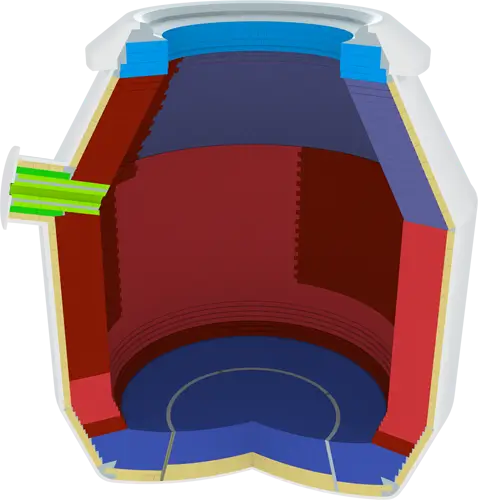
A split-type taphole design is employed; compared to a monolithic design, this configuration offers superior density, high-temperature strength, and erosion resistance, as well as a longer service life (Figure 1).
The original inner diameter of the taphole was 160 mm, resulting in a tapping time of 6–8 minutes. This excessive duration caused the following adverse effects:
(1) Prolonged tapping time accelerated the erosion of the converter lining on the tapping side;
(2) Extended tapping time led to significant heat loss, necessitating higher tapping temperatures; this, in turn, lengthened the converter cycle and reduced production efficiency;
(3) The contact time between the molten steel stream and the air increased, leading to nitrogen pickup and oxidation of the steel through interaction with atmospheric nitrogen and oxygen.
Following evaluation, the inner diameter of the taphole was increased to 180 mm, and the taper of the inner bore was enlarged. Practical application demonstrated that modifying the taphole brick’s diameter and taper reduced the tapping time from the original 6–8 minutes to 3.5–5 minutes. This reduction improved converter productivity and minimized temperature loss during the tapping process.
As the test results met production requirements, a taphole with an inner diameter of 150/180 mm was adopted. Although the wall thickness at the taphole inlet remained unchanged, the shorter tapping time reduced erosion caused by the flow of molten steel, extending the average service life of the taphole from 200 heats to over 300 heats. Consequently, downtime for taphole replacement was reduced, and the consumption of gunning materials for taphole maintenance decreased.
- Use of a Taphole “Bowl Brick”
The interface between the taphole and the inner nozzle is susceptible to erosion by molten steel, which limits the taphole’s service life; therefore, a replaceable “bowl brick” is installed at this location. When the bowl brick suffers severe erosion or melting, it can be replaced simultaneously with the inner nozzle. This approach is expected to extend the overall service life of the taphole to over 400 heats.
- Improvement of the Slag-Blocking Slide Gate
The zirconia-mullite raw material used in traditional alumina-zirconia-carbon slide gates tends to decompose during service, leading to a porous structure and reduced corrosion resistance, which hinders further improvements in the slide gate’s service life [1]. Replacing zirconia-mullite with zirconia-corundum and zirconia, while simultaneously increasing the zirconia content, enhances the material’s erosion resistance. Optimizing the firing schedule and atmosphere promotes the growth of SiC whiskers within the slide gate plate. The formation of abundant SiC whiskers in the matrix improves the material’s strength and thermal shock resistance.
Modifying the shape of the taphole bore increases the tapping speed and reduces interference between the molten steel and the taphole; this stabilizes the steel stream, minimizes turbulence at the taphole exit, prevents late-stage slag entrapment, and reduces erosion on the slide gate plate surface. Shortening the tapping time reduces the duration of scouring on the slag-blocking slide gate and the inner/outer nozzles, thereby lowering the bore enlargement rate of these components. With the new taphole design, the service life of the slide gate plate increases from approximately 14 heats to around 18 heats. Subsequent trials reducing the nozzle bore diameter from 150 mm to 140 mm showed no significant increase in tapping time, yet extended the slide gate plate’s service life to over 20 heats, reaching a maximum of 23 heats.
- Dual-Stage Slag Blocking Technology
A slag-blocking plug is used to block slag carryover during the initial stage of tapping, while the slide gate plate is used to block slag during the final stage. Combining these two methods significantly improves slag-blocking efficiency. After tapping begins, the device inserts the slag-blocking plug into the taphole of the slag-blocking slide gate; the plug utilizes high friction to withstand the impact of the initial slag, thereby effectively blocking it. The slide gate plate is not used for the initial slag-blocking stage because the slag-blocking plug is more cost-effective and offers superior performance.
4.Conclusion
By optimizing the inner bore dimensions and taper of the taphole and incorporating a replaceable “bowl brick” on a 120t converter, the tapping time has been reduced and the service life of the taphole extended. Additionally, the service life of the slag-blocking slide gate can be improved by reducing the slide gate bore diameter, using a slag-blocking plug at the inlet, and optimizing the slide gate material. Implementing these measures has increased the average service life of the 120t converter slide gate from 14 heats to over 20 heats, and extended the taphole service life to over 300 heats; the use of a taphole with a bowl brick offers the potential to further extend the service life to 400 heats.