
Eccentric Bottom Tapping (EBT) Electric Arc Furnace
The EBT (Eccentric Bottom Tapping) electric arc furnace smelting process employs a “hot heel” practice (retaining a portion of the molten steel and slag). This establishes a molten bath right at the start of melting; combined with intensive oxygen blowing and bottom stirring, it creates favorable conditions for initiating metallurgical reactions at an earlier stage. To maximize economic efficiency, the furnace is designed to minimize melting time, maximize the heating rate, and reduce auxiliary times—such as those required for furnace repair, charging, electrode replacement, and tapping.
Structurally, the EBT furnace replaces the traditional tapping spout with a tapping box, featuring a taphole located at the bottom of the box that discharges vertically downward. An opening/closing mechanism is installed beneath the taphole to control the flow of steel, while an access port is positioned at the center of the tapping box roof to facilitate taphole filling and maintenance.
The EBT taphole is primarily repaired under the following circumstances:
(1) The taphole must be repaired if the tapping time is less than 1.5 minutes, if there is excessive slag carryover, or if the tapping stream is severely dispersed. Repairs are also required when the taphole service life exceeds 120 heats, the bottom tail brick is severely eroded (forming a flared shape at the lower end), or residual solidified steel at the bottom is difficult to remove after tapping.
(2) Repairs are mandatory if the inner bore of the taphole exhibits damage or cracks, particularly in severe cases.
(3) Severe erosion of the taphole seating brick can lead to taphole breakout accidents; therefore, repair or remedial action is necessary.
What materials are required to repair the taphole?
Before repairing the tapping hole, coordinate with the continuous casting operation to avoid interrupting the flow of molten steel or halting the casting process. Simultaneously, prepare the necessary refractory materials. The materials required for repairing the tapping hole include:
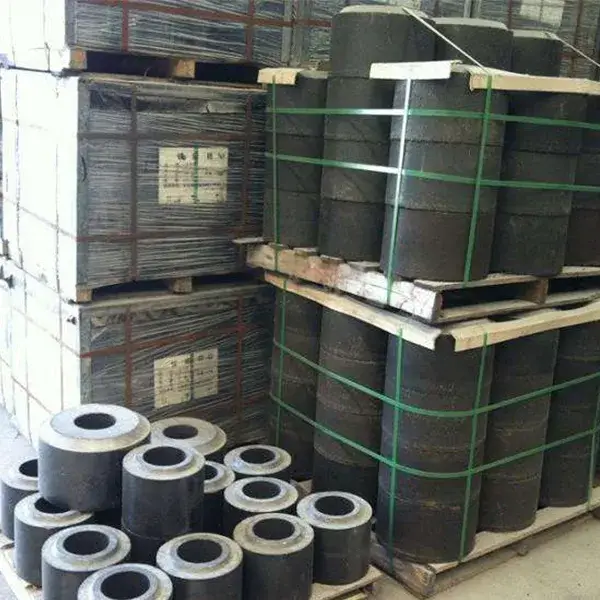
(1) Refractory material for the repair: Chrome-corundum material is commonly used. For a standard 160mm tapping hole, approximately 150kg of material is needed for initial repairs, while 200–250kg is required for later-stage repairs.
(2) A specially made cylindrical steel sleeve (or a cylindrical drum welded from thick sheet metal). Steel sleeves can be salvaged from scrap metal or fabricated by cutting a steel pipe with an outer diameter matching the tapping hole’s inner cavity; a wall thickness of 1–2cm is ideal. The sleeve or pipe should be at least as long as the tapping hole itself. Steel pipes and sleeves resist deformation, whereas welded sheet-metal drums are prone to heat-induced deformation, which can compromise repair quality. Consequently, sheet-metal drums serve only as a fallback option when steel drums or pipes are unavailable. Before the repair, a lid with a small central hole must be fitted to the sleeve or drum to prevent repair material from falling into the inner cavity during filling.
(3) One to three oxygen lances, approximately 4m in length and 4cm in diameter.
(4) Three to five small buckets for holding the prepared repair material.
(5) A pouring chute, approximately 50cm in length. This can be fabricated by splitting a large-diameter steel pipe lengthwise or by cutting a section of channel steel.
What is the procedure for repairing the taphole?
The standard time required to repair the tapping hole is approximately 15 minutes. The repair procedure is as follows:
(1) For the heat immediately preceding the repair, the charging team must be notified beforehand not to include large pieces of cold scrap or refractory-heavy scrap, in order to prevent clogging of the EBT (Eccentric Bottom Tapping) system.
(2) The tapping temperature must be raised prior to tapping to prevent material buildup in the EBT’s “cold zone,” which could interfere with the repair process. If severe clogging is discovered in the cold zone after tapping and cannot be cleared quickly, the repair should be postponed until after the next heat is smelted.
(3) Five minutes before tapping, mix the chrome-corundum repair material with water. The initial mix should have a consistency similar to thick porridge—or even slightly thinner.
(4) Once tapping is complete, tilt the furnace toward the slag-discharge side by 2° to 7°. Use oxygen to clean the internal cavity of the tapping hole, ensuring the refractory material of the tapping hole brick is fully exposed, and then close the EBT slide gate.
(5) Insert the steel cylinder or sheet-metal bucket intended for the repair into the tapping hole through the sand-filling opening located above the EBT cover plate. This can be done by positioning a thin oxygen lance to extend into the tapping hole cavity, sliding the steel cylinder or sheet-metal bucket over the lance, feeding the assembly into the cavity, and finally placing the cover on top. During this operation, ensure the gap between the steel cylinder and the tapping hole brick is as uniform as possible.
(6) Use a chute to fill the prepared refractory repair material into the gap between the steel cylinder and the refractory brick. Throughout the filling process, constantly vary the discharge direction of the chute to ensure the refractory material is distributed evenly around the entire circumference of the tapping hole cavity. During the bottom repair process—specifically after 5 to 7 buckets of material have been added and the material begins to set—the slide gate is opened to prevent the refractory repair material from clogging the taphole cavity. Once the slide gate is opened, the cavity is cleared; after ensuring the passage is unobstructed, the repair continues to completion. Upon finishing the repair, the cavity is cleaned again, the slide gate is closed, EBT filler material is added, and smelting operations commence.
(7) Although manufacturer guidelines suggest removing the steel sleeve after the repair, our practical experience shows that if the steel sleeve is no thicker than 3 cm, leaving it in place causes no adverse effects.
(8) The repaired taphole should protrude approximately 20 mm above the surrounding furnace bottom; additionally, the area around the taphole should be rammed with taphole repair material to match the height of the taphole itself.