With the development of induction furnaces in the cast steel industry, the application of aluminum-magnesium spinel-type refractory materials has gradually gained prominence since the 1980s. Currently, crucible-type induction furnaces used in the cast steel industry across industrialized nations predominantly employ spinel-type refractories.
In recent years, some cast steel enterprises in China have also adopted spinel-type refractory lining materials. Among them, certain manufacturers purchase pre-blended materials from foreign suppliers. Although these materials perform well, they significantly increase production costs, and users often lack a thorough understanding of their properties. This article aims to introduce key characteristics of spinel-type refractory linings, providing industry professionals with reference material for formulating their own lining compositions and further refining lining materials. Additionally, given the continued use of silica sand linings, magnesia linings, and alumina linings in China’s cast steel sector, we will briefly outline the properties of these materials as well.
1.Silica sand furnace lining
Furnace linings constructed primarily from silica sand are commonly referred to as acidic linings. Silica sand offers numerous advantages: first, it is abundant and inexpensive; second, crucibles made from silica sand as the primary refractory material maintain excellent strength even at temperatures close to their melting point, demonstrating superior resistance to thermal shock and rapid temperature changes. Particularly noteworthy is that during furnace lining sintering, the expansion of quartz phase in silica sand compensates for volume shrinkage, thereby enhancing the sintered layer’s density and reducing porosity. Consequently, silica sand-based lining materials are widely adopted in crucible-type induction furnaces for melting various cast irons across the global foundry industry.
However, SiO₂ has a low refractoriness and is fundamentally unsuitable for steelmaking temperatures. Moreover, SiO₂ exhibits high chemical reactivity at elevated temperatures, readily interacting with various alkaline oxides and even neutral oxides during steelmaking. For instance, FeO readily forms olivine (Fe₂SiO₄) with a melting point of 1205°C upon contact with silica sand. This olivine can further react with SiO₂ or FeO to form eutectic components with a melting point of 1130°C. Furthermore, SiO₂ may be reduced by certain highly reactive elements present in molten steel. Consequently, using silica sand linings in steelmaking neither guarantees the metallurgical quality of the steel nor ensures the longevity of the furnace lining. Since the late 1980s, foundries in industrialized nations producing cast steel components using induction furnaces have discontinued the use of silica sand linings. To my knowledge, some enterprises in China still employ silica sand linings for melting cast steel, a practice that urgently requires improvement.
2.Magnesia furnace lining
The commonly used furnace lining material is metallurgical magnesia with an MgO content exceeding 86%, produced by high-temperature calcination of magnesite. When metallurgical magnesia is remelted in an electric arc furnace, impurities such as SiO₂ and Fe₂O₃ are reduced, yielding electrofused magnesia with higher purity (MgO content above 96%). Electrofused magnesia is primarily used for lining vacuum induction furnaces.
Metallurgical magnesia possesses exceptionally high refractoriness, making it a standard lining material for basic electric arc steelmaking furnaces. Despite its high melting point, resistance to sintering, and large coefficient of expansion, these drawbacks are fully mitigated in arc furnace linings. This is achieved through the use of substantial binding agents and wet ramming techniques, which compensate for these limitations due to the furnace’s thick lining structure.
When metallurgical magnesia is employed as lining material for induction furnaces, however, the constraints of lining thickness preclude wet ramming. Consequently, the negative effects of these shortcomings become pronounced. Crucibles made from magnesium oxide materials are prone to cracking, a problem particularly severe in intermittently operated furnaces.
3.Alumina-based furnace lining
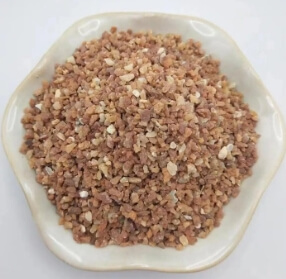
Both alumina and zirconia are neutral refractories, with alumina being the most widely used. Zirconia is rarely employed as a furnace lining material.
When used alone as a furnace lining material, alumina exhibits strong crack resistance and protection against acidic slag erosion, but it is unsuitable for forming alkaline slag. Furthermore, due to its high refractoriness and poor sintering properties, the lining’s service life is not particularly long.
4.Spinel-type furnace lining
Spinel minerals exhibit isomorphous characteristics, with numerous varieties and relatively complex compositions. Their molecular formula can be written as M²⁺O•M³⁺₂O₃, where: M²⁺ represents certain divalent metal atoms such as Mg, Fe, Zn, Mn, etc.; M³⁺ represents certain trivalent metal atoms such as Mg, Fe, Zn, etc. Therefore, it can also be written as (Mg,Fe,Zn,Mn)O•(Al,Cr,Fe)₂O₃.
Among the divalent metal ions present in spinel minerals, Mg²⁺ and Fe²⁺ can substitute for each other in any proportion. Among the trivalent metal ions, Al³⁺ predominates, but Cr³⁺ can replace Al³⁺ in any proportion, while Fe³⁺ can only substitute for Al³⁺ or Cr³⁺ within certain limits. Common spinels include the following types:
Magnesium-aluminum spinel MgO•Al₂O₃
Iron-aluminum spinel FeO•Al₂O₃
Pyrite (iron-chromium spinel) FeO•Cr₂O₃
Magnetite (iron spinel) FeO•Fe₂O₃
Magnesium-iron spinel (Mg,Fe)O•(Al,Fe)₂O₃
Zinc-aluminum spinel ZnO•Al₂O₃
Magnesium-chromium spinel MgO•Cr₂O₃
Zinc-iron spinel ZnO•Fe₂O₃
Manganese-chromium spinel FeO•Cr₂O₃
Manganese-aluminum spinel MnO•Al₂O₃
Currently, in industrialized nations, the primary refractory lining material for induction furnaces in steelmaking is magnesium aluminum spinel (MgO•Al₂O₃), commonly referred to as “spinel.” Pure magnesium aluminum spinel contains only 28.2% MgO, yet it still classifies as an alkaline refractory material.
Magnesia-alumina spinel materials exhibit high refractoriness, low thermal expansion coefficient, excellent thermal stability at elevated temperatures, and strong resistance to alkali slag erosion. Notably, during sintering to form spinel, MgO and Al₂O₃ undergo 7.9% volumetric expansion. This expansion compensates for volumetric shrinkage during sintering, reducing the porosity of the sintered layer. This characteristic aligns with a key advantage of silica sand linings.
Magnesium-aluminum spinel is essentially non-existent in natural deposits and is entirely produced synthetically. Its preparation methods include electric melting and sintering. China’s metallurgical industry established the YB/T 131-1997 industry standard for “Sintered Magnesium-Aluminum Spinel” as early as 1997, referencing the specifications of Alcoa Chemical Company’s MR66 and AR76 materials.
Spinel-type refractory lining materials are not entirely composed of spinel. Instead, they are based on granular Al₂O₃ or granular MgO materials, with corresponding powdered or fine-grained spinel added to form the material. This ensures uniform distribution between the granular refractory components. During sintering, a magnesium-aluminum spinel network forms between the alumina particles, serving as a bonding agent. Additionally, small amounts of boric acid or boric anhydride are incorporated to enable spinel network formation at lower temperatures (around 1300°C).
The optimal solution is for each cast steel enterprise to formulate its own lining material by conducting trials to optimize and select the most suitable composition based on its specific conditions. This approach ensures extended lining lifespan and high metallurgical quality of steel while significantly reducing production costs.
Regarding the composition ratio of furnace lining materials, it should be selected based on the actual composition of the raw materials used and determined through testing. When determining the lining material ratio, calculations can be made according to the following target compositions:
When using alumina as the base granular material:
Maintain the mass fraction of Al₂O₃ in the lining material at approximately 85–88%, and the mass fraction of MgO at approximately 22%.
When using magnesium oxide as the base granular material: Maintain the MgO mass fraction in the furnace lining material at approximately 75–85%, and the Al₂O₃ mass fraction at approximately 15–22%.