The bottom argon blowing technique in ladles not only effectively balances the composition and temperature of molten steel but also causes the reaction products between slag and refractory materials to rise to the surface through dispersed microbubbles, thereby enhancing cleanliness. Argon blowing treatment plays a crucial role in improving ingot quality and stabilizing ingot casting processes.
Improvements to the existing refining process ensure thorough contact between argon gas and molten steel within the ladle. This increases the argon gas’s upward flow path and duration within the ladle, thereby achieving the refining effect required for submerged slag oxygen supply. To achieve efficient deoxidation and desulfurization, the deoxidation capacity of the submerged slag must be enhanced during refining, ensuring the slag’s W(FeO+MnO) content remains below 0.5%.
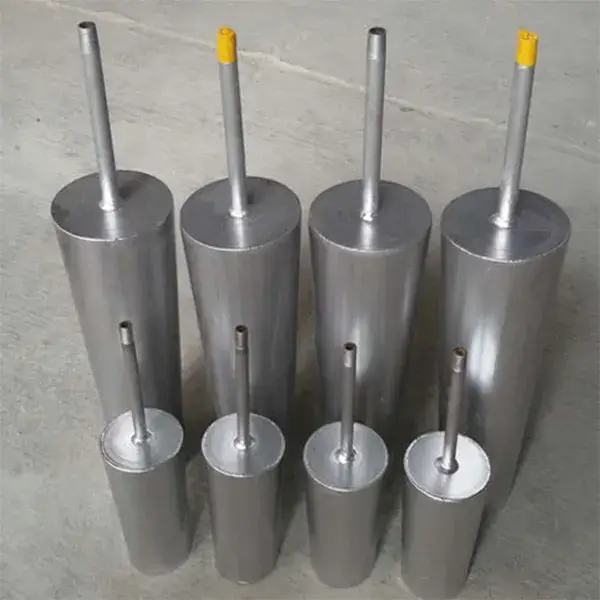
Frequent spraying of the spray-on material was investigated. The material undergoes thorough sintering at the residual temperature of the vent bricks. Repeating this process multiple times forms a mushroom-shaped “honeycomb” structure. This prevents damage to the vent bricks’ permeability, maintaining normal operational conditions and preventing molten steel from infiltrating the working layer. The externally mounted bottom-blown argon permeable bricks employed in the operation not only meet the requirements of the ladle bottom-blown argon process but also reduce unnecessary ladle stoppages.
Research on convection fields, mixing time, and wall stress influences led to an optimized layout design for the ladle bottom argon vent brick arrangement. Through numerical simulation using the VOF multiphase flow model, experiments confirmed that the design reduces ladle erosion rates and extends ladle life.
Through simulation studies using water models and high-quality vacuum pump oil, the effects of dual vent brick bottom argon blowing positions on molten steel quality and the impact of different blowing positions on molten steel exposed area were investigated. Experiments revealed that erosion erosion of the ladle wall diminishes when: the angle between dual vents in the venting brick structure is 180°, the exposed molten steel area within the ladle is minimal, and the venting holes are positioned on a 0.6R radius circumference with short mixing time.
The slit-type vent brick, when used in the bottom-blowing process, offers excellent venting performance, simple installation, and a long service life. It can fully replace the top-blowing argon process while also providing assurance for the implementation of the ANS-OB argon blowing process.
Ladle argon blowing is currently the most widely used and simplest method of ladle metallurgy. Primarily employing bottom-blown argon, this process homogenizes the composition and temperature of molten steel within the ladle while removing some impurities, thereby enhancing the cleanliness of the steel. Among ladle metallurgy techniques, bottom-blown argon represents the most cost-effective and operationally straightforward option.